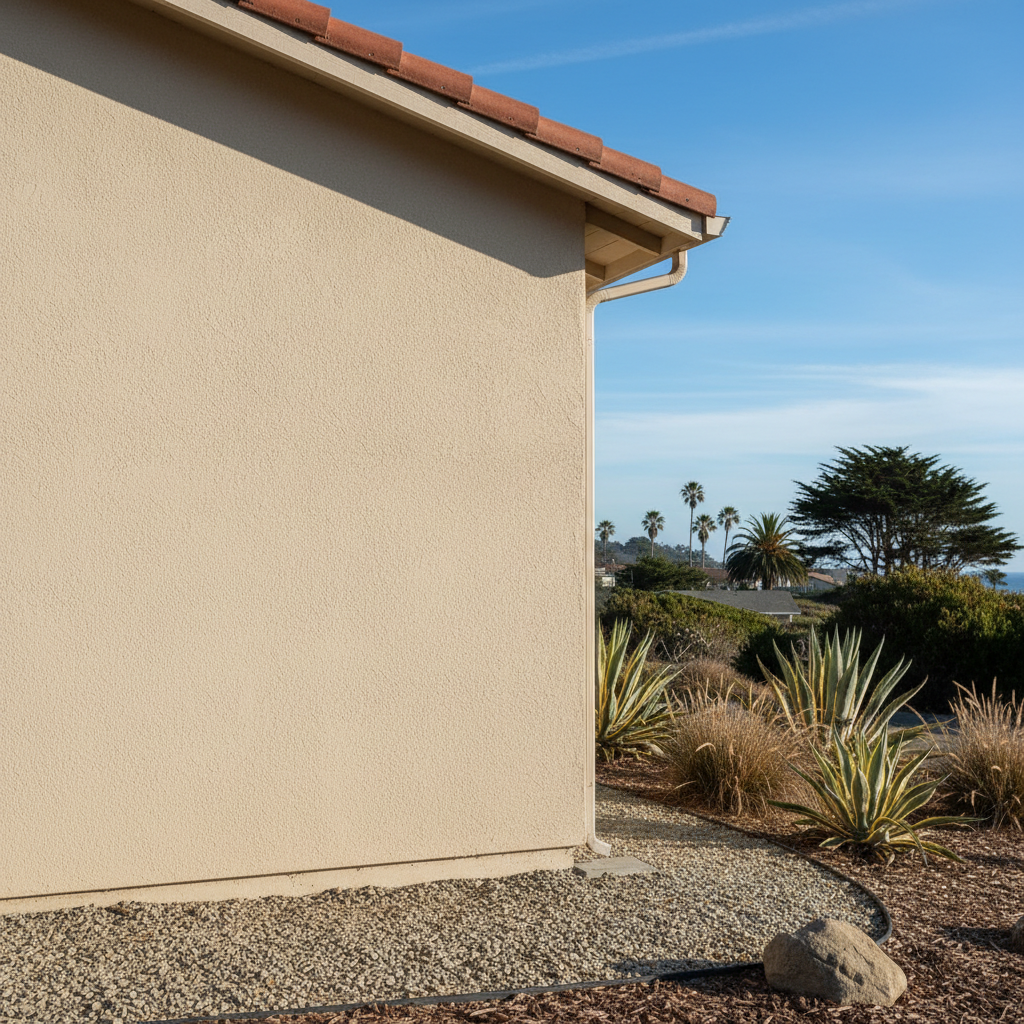
Stucco's a great choice for homes here in Marina, CA. It's durable, looks good, and handles our coastal air pretty well. But 'durable' doesn't mean 'indestructible,' right? Just like anything else on your home, it needs a little love to really go the distance. I've seen plenty of stucco jobs over the years, and I can tell you, a little regular maintenance goes a long, long way.
Extending Your Stucco's Lifespan
You want your stucco to last? It's not rocket science, but it does take some attention. First off, water is your biggest enemy. Not rain itself, but uncontrolled water. Think about it: our marine layer can keep things damp for hours, and if that moisture gets trapped behind the stucco, you're looking at trouble. So, make sure your gutters are clean and draining properly, away from your foundation. I can't stress this enough. If water is constantly dripping down a wall from a clogged gutter, it's going to find a way in, eventually.
Another big one is landscaping. Keep shrubs and trees trimmed back from your stucco walls. They hold moisture against the surface, and their roots can even cause issues if they're too close to the foundation. Plus, bugs love to hide in overgrown bushes, and some of those critters can cause damage or create pathways for moisture.
Finally, think about the paint or coating you use. A good quality elastomeric paint can add an extra layer of protection, especially against hairline cracks. It's flexible, so it moves with the house a bit, which is important with our temperature swings — even if they aren't as extreme as inland areas.
What Regular Maintenance Looks Like
This isn't a full-time job, I promise. Most of what you need to do is pretty straightforward. Once or twice a year, give your stucco a good visual inspection. Walk around your house, really look at the walls. What are you looking for? We'll get to that in a minute. After that, a gentle cleaning is usually all it takes.
For cleaning, use a garden hose with a spray nozzle. Not a pressure washer! I've seen too many people blast holes right through their stucco with a high-powered washer. You just want to rinse off dirt, dust, and any salt residue we get from the ocean air. If you've got some stubborn spots, a soft brush and a mild detergent (like dish soap mixed with water) will usually do the trick. Rinse thoroughly afterwards to make sure you don't leave any soap film.
Check around your windows and doors, too. The caulking around these openings is crucial for keeping water out. If you see any cracking, shrinking, or gaps in the caulk, it's time to re-caulk it. It's a small job that prevents big problems.
Warning Signs of Problems
Alright, so you're doing your regular inspection. What should make you pause? Here are the big ones:
- Cracks: Not all cracks are bad. Hairline cracks are pretty common and often just surface-level. But if you see cracks that are wider than a credit card, or if they're running horizontally or in a stair-step pattern, especially around windows or doors, that's a red flag. Those can indicate structural movement or water intrusion.
- Stains or Discoloration: Dark streaks, especially under windows, near the roofline, or around vents, almost always mean water is getting in somewhere it shouldn't. Black or green patches could be mold or mildew, which points to persistent dampness.
- Bulging or Soft Spots: If you push on the stucco and it feels soft, spongy, or you see a bulge, that's a serious sign of trapped moisture and likely rot underneath. Don't ignore this.
- Peeling or Flaking Paint: If the paint on your stucco is peeling, it's not just an aesthetic issue. It means moisture is getting behind the paint, pushing it off the surface.
- Efflorescence: This looks like a white, powdery residue on the surface. It's mineral salts left behind when water evaporates from within the stucco. It's a clear sign that water is migrating through the wall.
When to Call a Professional
You're a homeowner, not a stucco expert, and that's fine. Knowing when to call in the pros is just as important as knowing how to do the basic stuff yourself. If you see any of those serious warning signs I just mentioned – wide cracks, bulging, persistent staining, or anything that makes you uncomfortable – don't hesitate. It's always better to catch these things early.
For example, if you've got cracks that seem to be getting worse, or if you suspect water is getting behind the stucco, you need someone to properly diagnose the issue. Sometimes it's a simple repair, other times it's more involved. Here at Pacific Stucco Inc, we've got the experience to figure out what's going on and fix it right. Don't let a small problem turn into a huge, expensive headache. A professional inspection can save you a lot of grief and money down the line.